History
Program Details
History is more than just memorizing dates, names and places. It’s about exploring sources from the past to understand how people, events and cultural movements shape the world today. As a student in the history major, you’ll develop a deep understanding of societies, economies, cultures and political structures across time periods and geographies. You’ll also become an active contributing scholar through conducting and presenting original research. The Bachelor of Arts in History curriculum is flexible, so you’ll be able to study and research what interests you most.
Degree Awarded
Bachelor of Arts in History
Concentrations
Public History
Curriculum
The sample course sequence below illustrates class offerings for the History major. Consult the official Xavier University course catalog for detailed registration and advising information.
Fall
- Historical Perspectives............ 3cr.
- Scientific Perspectives............ 3cr.
- ENGLISH 100/115 Composition/Rhetoric............ 3cr.
- second language I............ 3cr.
- CORE 100 First-Year Seminar............ 3cr.
- CORE 101: GOA Co-Curriculum Program I............ 0cr.
Spring
- THEOLOGY 111 Theological Foundations............ 3cr.
- Creative Perspectives............ 3cr.
- PHILOSOPHY 100 Intro to Ethics............ 3cr.
- second language II............ 3cr.
- Mathematical Perspectives............ 3cr.
- CORE 102: GOA Co-Curriculum Program II............ 0cr.
Fall
- History Elective............ 3cr.
- History Survey I............ 3cr.
- Literature & Moral Imagination............ 3cr.
- Social Science Elective............ 3cr.
- Theological Perspectives............ 3cr.
Spring
- History Elective............ 3cr.
- History Survey II............ 3cr.
- Natural Science Elective............ 3cr.
- Philosophical Perspective............ 3cr.
- General Elective............ 3cr.
Fall
- History Seminar............ 3cr.
- History Elective............ 3cr.
- E/RS Elective............ 3cr.
- General Elective............ 3cr.
- General Elective............ 3cr.
Spring
- History Elective............ 3cr.
- General Elective............ 3cr.
- General Elective............ 3cr.
- General Elective............ 3cr.
- General Elective............ 3cr.
Fall
- History Seminar............ 3cr.
- History Elective............ 3cr.
- General Elective............ 3cr.
- General Elective............ 3cr.
- General Elective............ 3cr.
Spring
- History Elective............ 3cr.
- History Elective............ 3cr.
- General Elective............ 3cr.
- General Elective............ 3cr.
- General Elective............ 3cr.
History Courses
Sample courses within the history major curriculum:
- Slavery In the Atlantic World (HIST 231) - The slave trade that occurred between the early 1500s to the mid-1880s is one of the experiences that link the continents of Europe, Africa and the Americas. Using the Atlantic World as the focus, we will examine the themes of slave trade, slavery, abolition and emancipation on both sides of the Atlantic over three and a half centuries. We will be particularly interested in comparing experiences of slavery and emancipation in different parts of the New World and Africa. This course is very much a history from below in which we examine the lives and experiences of those who were enslaved. The role of slave owners and slave traders will be considered as well, but the will not be the focus of the course.
- Introduction to Public History (HIST 290) - This course will introduce students to the practice of presenting history to the public at large. It will provide students with basic preparation for work in cultural resource management, historic preservation, and museum fields.
- Sports & Leisure in the US (HIST 336) - This course examines the histories of American sport as not only a form of exercise, leisure, competition and entertainment but also as a form of monopolistic business, nationalism and contesting identities of race, class and gender. We trace the multiple histories of sport (including colonial notions of play, bare-knuckle boxing in the early republic, the Victorian bifurcation of “amateur” and “professional,” the rise of folk heroes, racial inclusion and exclusion, the nationalistic struggles of the Olympics, the industry of sport, gender equality and inequalities, and medical understandings of brain injuries dating back to the 19th century) because sport and sport culture serves as a useful mirror of American society.
- Contemporary Latin America (HIST 344) - This course examines political, economic and social processes that have shaped Latin America from approximately 1930 to the present. The sources that students will encounter in this course include memoirs, newspapers, testimonios, novels, films, and popular music, in addition to monographs and scholarly articles. These sources will help students to understand how major events influenced ordinary people's lives and how social movements, in turn, shaped the history of Latin America in the 20th and 21st centuries.
- Vikings! (HIST 364) - What do we know about Vikings? Scandinavian marauders who pillaged at will throughout Europe, or highly efficient tradesmen who built kingdoms on their success? Or perhaps they were great poets who tamed time, space, and gods with their words and raised memorials in stone to their loved ones? Or men with horned helmets and furry leg-warmers who quaffed mead in copious quantities while yearning to die in battle and fly to Valhalla, the sky-hall of the gods? We will use their own words, as well as the words of their enemies, friends and descendants, to address these questions.
Career Outcomes
99% of Xavier students, including those in the history major, are working, volunteering or in graduate school within six months of graduation (Class of 2022).
Recent student job placements: Boy Scouts of America, Center for Holocaust and Humanities Education, Equity Office Properties, Lakota Local School District, Loyalty 360, Reynolds and Reynolds, St. Vincent de Paul
Career Opportunities: Collections Associate, Lawyer, Teacher, Research Analyst, Librarian, Archivist, Curator, Journalist/Writer
More: Xavier's Career Development Office assists students in their search for employment by offering individual career counseling sessions, conducting workshop series on interviewing and resume writing techniques and maintaining an educational, vocational and employer information resource center.
History Clubs
- History Club- The Xavier History Club's purpose is to expand the knowledge of history and to make history enjoyable. Students discuss diverse historical topics and engage in interactive simulations of historical events. They also explore the history of the tri-state region through exciting and enriching field trips.
- Pre-Law Society- The Pre-Law Society is a club for all students who are interested in going to law school after Xavier. Meetings help prepare/inform students about applying to law school and what the life of a lawyer entails. Meetings typically revolve around a guest speaker or panel of speakers, followed by an informal Q&A session.
When we seek something more, we become something greater.
Find more information about how you can become a Musketeer.
Request InformationAll for One
Xavier University, located in Cincinnati, Ohio, is nationally recognized as a top university by U.S. News & World Report and The Princeton Review. 99 percent of our students, including those in the history major, are working, volunteering or in graduate school within six months of graduation (Class of 2022).
Make Meaningful Contributions to Historical Scholarship
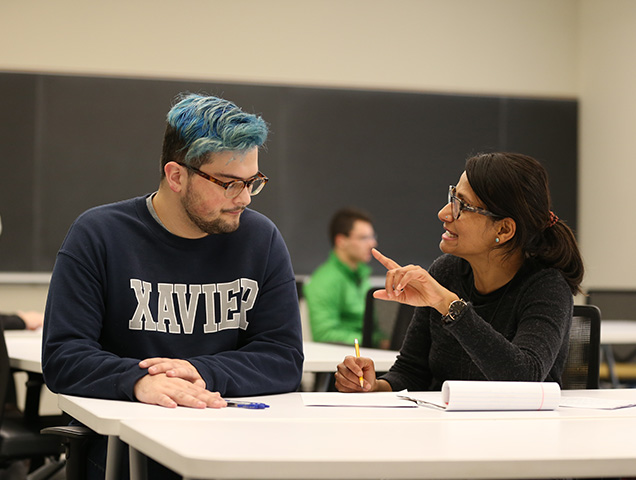
Through original research projects, you'll uncover new insights, challenge existing interpretations and shed light on overlooked topics. Students have collected oral histories from, among others, blues and country musicians, entrepreneurs, environmentalists and Holocaust survivors.
Use Digital Technology to Bring History to Life

In today's interconnected world, digital tools and platforms have become indispensable resources for historians. Whether through interactive websites, virtual exhibitions or multimedia presentations, you'll harness the creative potential of digital media to make history more accessible to the general public.
Kickstart Your History Career in Cincinnati, Ohio
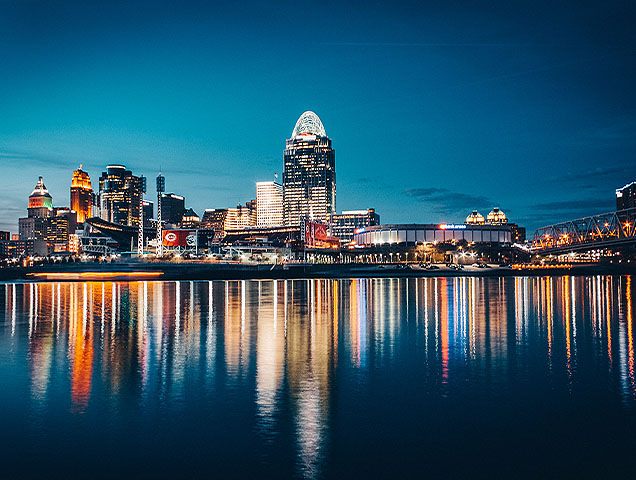
Cincinnati, Ohio is home to multiple historical organizations that offer internships, volunteer work and experiential learning to students in the history major. Organizations include the Cincinnati History Museum, the Center for Holocaust and Humanity Education and the National Underground Railroad Museum.
Graduate With Honors
Are you looking for an academic challenge? The University Scholars Honors Program offers incoming students a more challenging curriculum and close support from professors while completing their undergraduate degree. Acceptance into the program is highly selective and includes a $2000 travel grant.
History Major at Xavier University
History is an academic major with a long and proud tradition at Xavier University. Our faculty engage in research and are active in a wide array of professional and civic organizations. Classes are small and students get to know our teachers on an individual basis.
Xavier University’s College of Arts and Sciences challenges students to develop an integrated understanding of humanity, the world, and God by pursuing the questions raised in Xavier's core and departmental curricula. The College of Arts and Sciences is the oldest and largest college at Xavier University. The college provides an excellent liberal arts education in the Jesuit tradition that prepares students for careers, professional or graduate school, and life in a global society.
Xavier University is a private university located in Cincinnati, Ohio, providing a liberal arts education in the Jesuit Catholic tradition. Founded in 1831, the University is the sixth-oldest Catholic university in the nation. It has been ranked among the top 10 master's-level universities in the Midwest by U.S. News & World Report for the past two decades. The Princeton Review names it one of the "Best 385 Colleges in America."